
Best Long-Range Electric Bikes in 2026: What to Look For
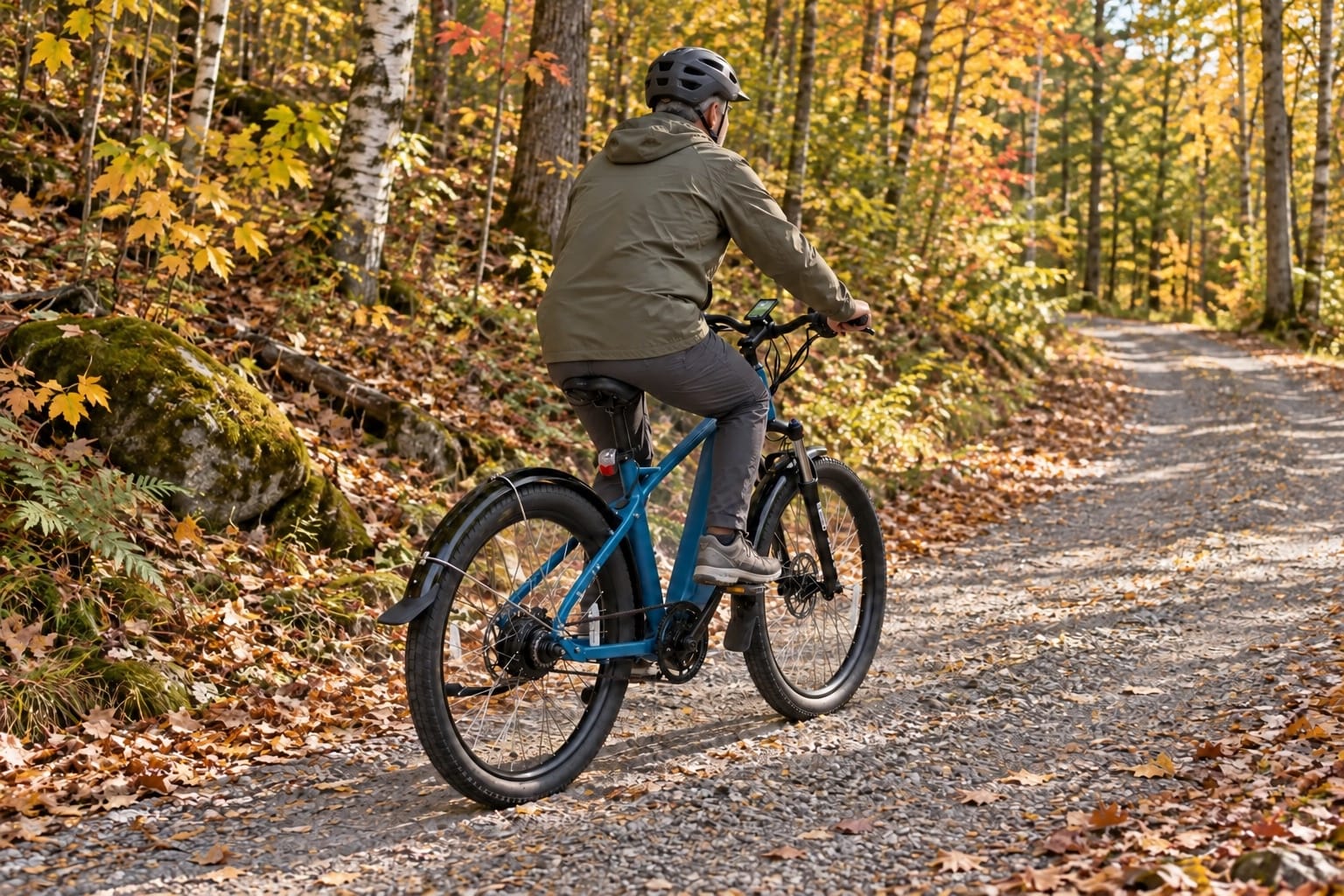
The café you want to ride to is 20 miles away. There is a scenic route you would like to try, a few hills along the way, and a return journey to think about. When you are shopping for an electric bike, those details make the range question feel much more practical.
You want enough battery to enjoy the ride without spending the afternoon watching the display.
The best long-range electric bike combines sufficient battery capacity for your route, a motor and transmission suited to the terrain, and a fit that stays comfortable over several hours. A second battery can be useful for longer days, while realistic expectations about speed, assistance and climbing help you choose the right setup.
EVELO has been developing electric bikes since 2012. Our approach to longer rides is to look at the whole setup: the route, rider, battery, gearing and comfort. This guide explains how to make that comparison before choosing a bike.
TL;DR: What Matters Most in a Long-Range Electric Bike?
-
Start with your complete route. Include the return journey, climbing, luggage, and the assistance you want to use.
-
Compare battery capacity in watt-hours. Amp-hours and motor wattage alone will not tell you how far a bike can travel.
-
Check the conditions behind the mileage. An advertised maximum may rely on low assistance, favorable conditions or an optional second battery.
-
Choose extra capacity when it serves a purpose. A second battery can help with longer days and demanding routes, but adds cost and weight.
-
Give fit and comfort equal attention. You need a bike that feels good throughout the ride, with enough energy left for the way home.
Which Long-Range Electric Bike Is Right for Your Riding Style?
Start with the rides you expect to take regularly. A weekday commuter, a weekend explorer, and someone planning a week of touring may all want more range, but they will use it differently.
|
Your riding priority |
What to look for |
What to check closely |
|
Longer commutes |
Dependable daily range, practical luggage storage and convenient charging |
Whether the battery comfortably covers both directions in your usual conditions |
|
Scenic weekend rides |
Comfortable fit, suitable gearing and room for water and essentials |
Hills, detours and how much assistance you want late in the ride |
|
Long routes on varied surfaces |
Appropriate tires, useful low gearing and suspension where needed |
Total climbing, surface difficulty and the weight you will carry |
|
Multi-day touring |
Daily range, removable charging, luggage capacity and service support |
Charging access at each overnight stop and the most demanding day's route |
|
Longer rides with frequent motor assistance |
Sufficient battery capacity and an approved extended-range option |
Range evidence at higher assistance levels or with throttle use |
Use these priorities to narrow the type of bike you need. Battery capacity, gearing, frame fit, and charging convenience should work together around the same riding goal.
Advertised vs. Real-World eBike Range
What Does “Up to 100 Miles” Actually Mean?
An advertised maximum describes what a particular bike and battery configuration can achieve under the conditions used to establish that figure. Your route may ask considerably more of the bike.
Low assistance on a mostly flat route, with steady pedaling and moderate speed, is a different proposition from climbing hills with luggage and frequent throttle use. Both are reasonable ways to ride. They simply use energy differently.
Check the battery configuration, too. A 100-mile electric bike may need an optional second battery to reach its advertised maximum. Also check whether the figure refers to pedal assistance, throttle-only riding, or a trip that includes recharging.
How Can You Compare Range Claims Fairly?
Before comparing two mileage figures, look for battery capacity, rider weight, assistance level, speed, and route information. If the conditions are missing, ask the manufacturer what the number represents.
A larger advertised figure is useful context, but it cannot tell you how two bikes would perform with the same rider on the same road.
Good test reporting also tells you where the test ended. Was the battery fully depleted, or did the rider stop with a reserve? Was the result measured over the entire ride, or projected from a shorter outing? A measured distance is more useful when you can see how it was established.
For example, Electric Bike Report's published testing method uses separate rides at the highest and lowest useful assistance settings, starting with a full battery and continuing until it is depleted. That provides two reference points under its test conditions. A personal route plan should still leave energy in reserve.
How Much Extra Range Should You Allow?
Leave room for the part of the ride that does not go exactly to plan. The wind may pick up. A detour may add mileage. You may want more assistance on the way home.
For example, a café 20 miles away means at least a 40-mile ride before any exploring. If the return leg is uphill, it deserves particular attention. Start with shorter rides on similar terrain and build a picture of your own battery use.
A practical range check: Record your distance, assistance setting, climbing, load, and starting and finishing charge on a few familiar routes. Compare rides with similar conditions. If you have used half the displayed charge after 20 easy miles, that does not establish another 20 miles of range on a hilly return. The remaining route matters as much as the number on the screen.
Our guide to how far an ebike can really go explains the range variables in more detail.
How Much Battery Capacity Do You Need?
Compare Watt-Hours, Not Amp-Hours Alone
Watt-hours, abbreviated Wh, describe how much energy a battery stores. They are the most useful starting point for comparing battery capacity across bikes.
You can calculate nominal capacity from the voltage and amp-hour rating:
Volts × amp-hours = watt-hours
A 48V, 15Ah battery has a nominal capacity of 720Wh. At a different voltage, the same amp-hour rating represents a different amount of energy. That is why comparing “15Ah” with “15Ah” alone can be misleading.

Motor power is a separate measurement. A 600W motor rating does not mean the bike has a 600Wh battery or that it constantly draws 600 watts from it.
Turn Capacity Into a Planning Estimate
The basic calculation is:
Available battery energy ÷ energy used per mile ≈ riding distance
Suppose you have 600Wh available for a planned ride, after allowing for a reserve. At an assumed average consumption of 15Wh per mile, that gives approximately 40 miles. If consumption rises to 20Wh per mile, the same energy budget covers about 30 miles.
These are hypothetical examples rather than test results or typical consumption figures. Their purpose is to show why the same battery can produce different distances.
The capacity printed on the label is also not identical to the energy you should plan to use. Battery condition, temperature, system protection, and your chosen reserve all affect the calculation.
Think About Charging Between Rides
A removable battery can make charging easier when the bike stays in a garage or storage area. For touring, check where you can charge each night and whether the available stop is long enough for the charge you need.
Batteries also gradually lose capacity as they age. Allow for your riding needs over the next few years when choosing a system.
For more on the specifications, see ebike batteries explained.
What Reduces an Electric Bike’s Range?

Rider Weight, Luggage and Total Load
The bike carries everything together: you, the battery, water, bags, and any other equipment. Extra load increases the work involved in accelerating and climbing.
Think about your actual riding setup. A light neighborhood outing and a loaded touring day can place different demands on the same bike. A published rider-weight limit tells you about suitability for a load; it does not promise a particular distance at that load.
Hills, Headwinds and Riding Speed
Climbing requires energy that a flat route does not. Headwinds add resistance, and maintaining a higher speed generally takes more power.
Look beyond the mileage on the map. Where are the climbs? Is there an exposed stretch that often gets windy? A downhill outbound journey can leave the hardest work until you are heading home.
Assistance Level, Pedaling and Throttle Use
The more work the motor contributes, the more energy it generally needs. Steady rider input can extend range, while frequent high assistance or throttle use may shorten it.
Choose capacity around the way you want to ride. If you expect to use strong assistance on hills, include that in the buying decision. You should not have to spend every ride in the lowest setting simply to make it home.
Temperature, Tires and Frequent Stops
Cold weather can reduce the energy available from a battery. Tire construction and pressure affect rolling resistance, while repeated stops require the bike to accelerate again.
Use tire pressures appropriate for the tire, load, and riding conditions. The highest number on the sidewall is not automatically the best setting.
For practical changes you can make to your current bike, read our guide to increasing ebike range.
Single vs. Dual Batteries: Which Setup Makes Sense?
When One Battery Is Enough
One battery can be a good fit when it comfortably covers your regular route, and you can recharge between outings. It keeps the purchase simpler and reduces the weight you carry.
Think about how often you will use the extra capacity. Someone riding 20 miles most weekends has different needs from someone planning long days with little access to charging.
When a Second Battery Is Useful
A second battery gives you more energy for longer routes, luggage, climbing, or additional assistance. It can also give you more flexibility to extend a ride when the day is going well.
There are practical trade-offs. The battery adds cost and weight, needs secure mounting, and may affect rack space or cargo allowance. You will also need to charge it.
An Integrated System vs. Carrying a Spare
|
Setup |
Main advantage |
What to consider |
|
One battery |
Simpler, lighter setup |
Whether it covers your full route with a reserve |
|
Supported dual-battery system |
Both batteries are securely installed for extended riding |
Added cost, weight, mounting requirements, and charging |
|
Compatible spare battery |
Additional energy available when needed |
Secure transport and stopping to exchange batteries |
Check how the particular system works. Does it manage the two batteries automatically, or do you need to switch between them? Can both be charged while installed, and do they charge together or separately? Those details matter when you are preparing for another day's riding.
Compatibility matters. Use the system approved for your particular model rather than assuming any battery with a similar rating will work.
Can an Electric Bike Really Go 100 Miles?
What Needs to Line Up?
Yes, 100 miles is achievable on appropriately equipped electric bikes under suitable conditions. Planning that ride means considering both the energy required and the hours you will spend in the saddle.
Look for a range claim that identifies the battery configuration and riding conditions. Pedal-assist mileage should not be treated as a throttle-only promise. A 100-mile day with a lunch-stop recharge is also different from covering the entire distance on the energy you started with.
Work Backward From the Distance You Want to Ride
The same energy calculation applies to a longer day. At an assumed average consumption of 15Wh per mile, a 100-mile ride would use 1,500Wh before allowing for a reserve. Lower consumption would reduce that requirement; more demanding conditions would increase it.
This is a planning example, not a universal minimum battery size. It shows why a 100-mile claim needs context: the distance depends on both the available energy and how quickly your ride uses it. A charging stop can change the plan, provided you allow enough time and have confirmed access to power.
Do You Need That Much Capacity?
Extra capacity can be worthwhile even if you never plan to ride a century. It may give you a useful margin on a shorter, demanding route or let you use more assistance when you are tired.
For occasional outings close to home, you may place greater value on a compact fit, lower weight, or easier storage. Decide how the bike will earn its place in your everyday life.
How Do Motor Efficiency and Gearing Affect Long Rides?
Why Motor Wattage Does Not Tell You the Range
A motor’s power rating describes one aspect of its capability. It does not tell you how much energy the complete bike will use on your route.
Riding speed, assistance, gearing, motor efficiency, and load all contribute. Comparing battery capacity and documented riding conditions tells you more about potential distance than choosing the largest wattage number.
Mid-Drive vs. Hub Motor for Your Terrain
A mid-drive sends power through the bicycle’s transmission. Lower gearing can help it operate effectively on a climb, making it useful for routes with changing gradients.
A hub motor drives the wheel without using the bicycle’s gears. A well-matched hub system can work effectively on flatter routes. Neither layout guarantees the longest range; the complete bike and the conditions determine the result.
Gearing, Cadence and Shifting Ease
Choose gearing that lets you keep a comfortable pedaling rhythm. On a manually shifted bike, selecting an easier ratio before a climb helps avoid struggling against a gear that is too hard.
Automatic shifting handles those ratio changes around your preferred cadence. It can make a long, varied ride easier to manage, although it does not establish a fixed improvement in range.
Our complete guide to electric bike motors explains the different systems.
What Makes an Electric Bike Comfortable for Long-Distance Riding?

Fit, Riding Position and Easy Mounting
A bike that feels comfortable for ten minutes may reveal a long reach or awkward saddle position after an hour. Pay attention to pressure on your hands, tension in your shoulders, and how naturally you can pedal.
Easy mounting matters during repeated stops, too. A step-through frame can be useful when you are getting on and off throughout the day. Check the actual dimensions and adjustments rather than relying only on a broad height recommendation.
Saddle, Grips, Tires and Suspension
Your contact points deserve as much attention as the battery. A supportive saddle, comfortable grips, and an appropriate riding position can make longer outings more enjoyable.
Tires and suspension should suit the surfaces you ride. Front suspension can help on rougher routes, while fit and tire setup remain important on paved paths. Try the bike long enough to notice what needs adjusting.
Braking, Carrying Gear and Support
Consider the complete day: descending hills, carrying water and lunch, parking, and perhaps lifting the bike onto a vehicle rack afterward. Check both bike and rack load limits with batteries and accessories included.
Brakes need to be appropriate and well maintained. Lights, fenders, and practical luggage storage also matter when the weather changes or a ride runs longer than expected.
Ask about replacement parts and service support before buying. A bike used regularly for longer distances will eventually need attention, even with a low-maintenance drivetrain.
Compare Range Needs by Riding Scenario
Use your planned rides to decide which features deserve the most attention. The distances below are riding goals, not performance claims for a particular bike.
|
Planned ride |
What matters most |
What to check before choosing |
|
20–30-mile round-trip commute |
Reliable daily range and convenient charging |
Can the battery cover both directions in your usual weather and assistance setting? |
|
40–60-mile leisure ride |
Comfort over several hours, climbing and detours |
Is there evidence of sufficient range under conditions similar to yours? |
|
Hilly riding with frequent high assistance |
Energy demand, gearing and controlled descending |
Would additional battery capacity provide a useful reserve? |
|
75–100-mile day |
Battery configuration, route planning and rider endurance |
Is a supported second battery or charging stop part of the plan? |
|
Multi-day tour |
Daily mileage, luggage and overnight charging |
Can you cover each day’s route and recharge before the next? |
A week-long tour does not require a battery that covers the entire week. It requires a workable plan for each day. Equally, a relatively short route with sustained climbing can justify more battery capacity than the mileage alone suggests.
Which EVELO Model Suits Your Long-Distance Riding?
Once you know your route requirements, it becomes easier to compare specific bikes. Within the EVELO lineup, the main decisions are frame fit, automatic or manual shifting, riding surface, and whether you want an integrated second-battery option.

The Omega and Atlas both use a 48V, 15Ah primary battery (720Wh) and support our optional Super Range System. The watt-hour figure is the nominal energy capacity, calculated by multiplying voltage by amp-hours. The system installs a second battery in the rear rack and automatically switches from the main battery to the secondary one. Both batteries are charged separately. That gives riders a choice between the standard setup and more capacity for longer outings.
Omega: Comfortable Distance With Automatic Shifting
The EVELO Omega suits riders who want step-through access, an upright position, and automatic shifting. Its Enviolo AUTOMATiQ transmission adjusts around your preferred pedaling cadence, while the Gates belt reduces routine drivetrain upkeep.
The Omega offers up to 60 miles of pedal-assist range, or up to 100 miles with the optional second battery, giving you flexibility for longer paved outings. Consider its overall size and weight if lifting or vehicle transport is part of your routine.
Atlas: Longer Adventures on Varied Routes
The EVELO Atlas combines a suspension fork and 27.5-inch wheels with a Gates belt and manually controlled Enviolo transmission. It is the stronger starting point for riders who want direct control of their gearing on varied routes.
The Atlas offers up to 60 miles of pedal-assist range, or up to 100 miles with the optional second battery. The higher frame entry and larger fit deserve attention, especially if easy mounting is a priority.
Galaxy Lux: Compact Comfort for Longer Leisure Rides
The EVELO Galaxy Lux brings automatic shifting, an upright position, and 24-inch wheels to a compact step-through bike. It is worth considering when the larger models feel too tall or cumbersome.
It offers up to 55 miles of pedal-assist range. It does not use the Omega/Atlas Super Range System, so weigh its fit and convenience against your longest planned outings. For a rider who fits it well, those everyday benefits may matter more than additional maximum range.
Prefer Three Wheels? Consider the Compass
The EVELO Compass offers a different option for riders who prefer a trike, with cargo space and up to 40 miles of pedal-assist range, or up to 80 miles with the optional second battery.
Trikes handle differently from two-wheel bikes and can still tip. Allow time to become familiar with turning and road camber, and check storage and transport requirements before choosing one for longer trips.
|
Model |
Battery |
Range With Standard Battery |
Range With Optional Second Battery |
|
Omega |
48V, 15Ah (720Wh) |
Up to 60 miles |
Up to 100 miles |
|
Atlas |
48V, 15Ah (720Wh) |
Up to 60 miles |
Up to 100 miles |
|
Galaxy Lux |
48V, 11.6Ah (approximately 557Wh) |
Up to 55 miles |
No Omega/Atlas Super Range compatibility |
|
Compass |
48V, 10.5Ah (504Wh) |
Up to 40 miles |
Up to 80 miles |
Range varies with terrain, rider weight, assistance level, and riding conditions. Additional batteries are optional.
How Assistance Level Changes Range
Independent testing provides a useful example of how assistance level affects the distance you can cover. In its September 2025 Atlas review, Electric Bike Report measured the following distances using the standard 48V, 15Ah battery (720Wh) at Class 2 speeds:
|
Assistance setting |
Distance recorded |
|
Turbo |
36.4 miles |
|
Eco |
46.1 miles |
The Eco setting covered more distance on the same battery, while Turbo provided stronger assistance. That gives riders a practical choice: use the level of support that feels right for the route, and plan battery capacity around it.
These results apply to the single-battery configuration and conditions tested in 2025. The optional second battery was not included in the test.
Your Long-Range eBike Planning Checklist

Before choosing a bike or setting out on a longer route:
-
Count the complete journey. Include the return trip and any planned detours.
-
Check the route. Note climbing, surfaces, exposed stretches and likely weather.
-
Account for your load. Include luggage, water and equipment.
-
Plan around your riding preferences. Allow for the assistance and throttle use you expect.
-
Confirm the battery setup. Check what is included in the price and advertised range.
-
Leave a reserve. Identify charging opportunities or a shorter route if conditions change.
-
Check comfort and handling. Make adjustments during shorter rides before committing to a full day.
-
Build experience gradually. Use comparable local rides to learn how your bike uses its battery.
Long-Range Electric Bike FAQs
What Should I Look for in the Best Long-Range Electric Bike?
Start with battery capacity, suitable gearing, and a comfortable fit. Then compare the advertised range conditions with your terrain, load, and preferred assistance. Charging convenience and an approved second-battery option may be useful for longer outings.
Which Electric Bike Has the Longest Range?
There is no meaningful universal winner without agreeing on the battery configuration and test conditions. Compare watt-hours, rider input, speed, and terrain alongside the mileage. Within EVELO’s lineup, the Omega and Atlas offer up to 100 miles of pedal-assist range with the optional second battery.
Can an Electric Bike Travel 100 Miles Without Pedaling?
A 100-mile pedal-assist rating does not establish throttle-only range. Look for a separate throttle-only figure and its riding conditions if you plan to use the motor without pedaling. The Omega and Atlas offer up to 100 miles with pedal assistance and the optional second battery; throttle-only use will affect the distance you can cover.
Is a Dual-Battery Electric Bike Worth the Extra Cost and Weight?
It can be worthwhile for longer routes, limited charging access, or frequent high assistance. If one battery comfortably covers your regular rides, the additional cost and weight may offer little everyday benefit.
Can I Add a Second Battery After Buying My eBike?
That depends on the model. EVELO’s compatible Omega and Atlas models support the optional Super Range System. Confirm compatibility, mounting requirements, and current availability with the team before buying an add-on.
Can I Keep Riding if the Battery Runs Out?
An ebike can generally still be pedaled after assistance stops, but the effort depends on its weight, drivetrain, terrain, and your ability. Test how your bike feels without assistance close to home, and plan to finish longer rides with battery remaining.
Find the Right Bike for the Rides Ahead
Picture the ride you want to take: the distance, the hills, the stops, and how much help you would like along the way. Those details give you a useful starting point for choosing battery capacity and narrowing down the bikes that fit.
If you are deciding between models, our team can help you compare fit, shifting, and range around your plans.
Already have an ebike? Explore our practical range-improvement guide for ways to get more from your current setup.
About EVELO
EVELO has been designing electric bikes since 2012, with a focus on comfortable riding, thoughtfully matched components, and support throughout ownership. Distance riding has been part of that history from the beginning: in our launch year, co-founder Boris Mordkovich led a 4,000-mile electric bike tour from New York to San Francisco to test the first models.
Today, our lineup brings together mid-drive motors, accessible frame options, and features such as belt drives and automatic shifting on selected models. Our U.S.-based team helps riders compare fit, terrain, battery options, and riding preferences before buying, then provides technical support after delivery.
For a long-distance rider, those details all belong in the same conversation. The goal is a bike that suits your route, feels comfortable to ride, and has support available as the miles add up.