
Electric Bike Motors: The Complete 2026 Guide (Types, Power, Torque & Real-World Performance)
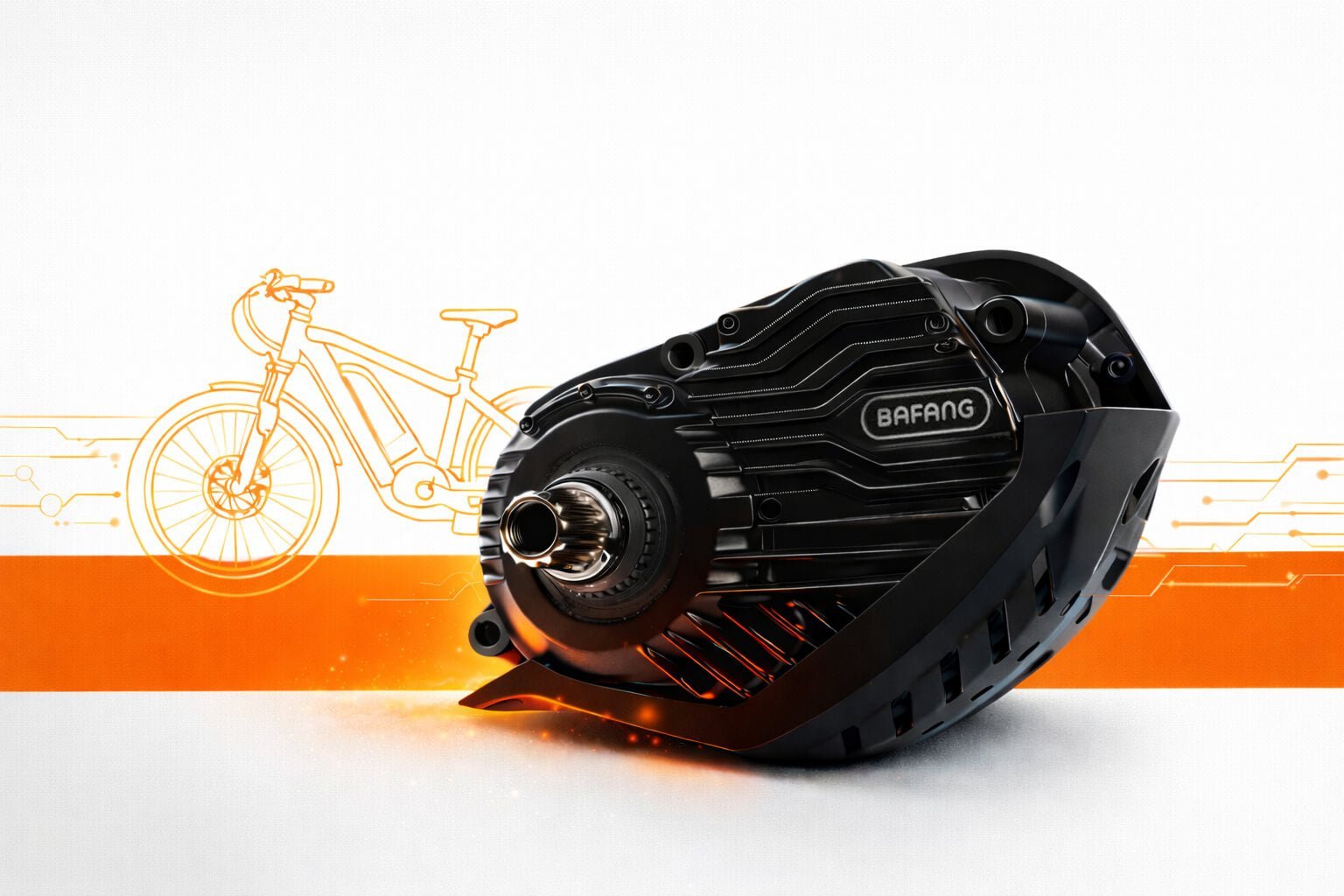
An expert deep dive into how electric bike motors work, the differences between mid-drive and hub motors, wattage myths, torque curves, sensor systems, and how to choose the right motor for your riding style.
Electric bike motors are the heart of every eBike. They determine how quickly you accelerate, how easily you climb hills, how natural the ride feels, and even how far you can go on a single charge. Yet despite being one of the most important components on any eBike, motors are also one of the most misunderstood.
As a premium eBike manufacturer that has spent more than a decade testing motor platforms, torque systems, gearing architectures, and real-world configurations, we’ve seen firsthand that most riders aren’t choosing the wrong eBike—they’re choosing the wrong motor.
This guide is designed to fix that.
Below, you’ll find a comprehensive, expert-level explanation of:
- The differences between mid-drive, rear-hub, and front-hub motors
- What wattage really means (and what it doesn’t)
- Why torque is far more important than raw power
- How motors interact with your battery and gearing
- When high-power motors make sense—and when they don’t
- What affects motor lifespan, heat management, and maintenance
-
The best motor types for hills, commuting, seniors, cargo loads, and long-distance rides
By the end, you’ll know more about eBike motors than 95% of riders—and you’ll be able to choose your next eBike with genuine confidence.
Key Takeaways
- Mid-drive motors deliver the best hill-climbing, range, and ride feel.
- Torque matters more than wattage — 100–120 Nm is ideal for real-world riding.
- Hub motors are fine for budget bikes but lose efficiency on hills.
- Torque sensors make pedal assist smoother, safer, and more natural.
- Automatic shifting (like Enviolo Automatiq on EVELO models) is the future of eBike comfort.
- For commuting, hills, or long rides, choose a mid-drive eBike with a torque sensor.
What Is an Electric Bike Motor — and How Does It Work?
An electric bike motor converts electrical energy from the battery into mechanical energy that helps turn your pedals and move the bike forward.
Every eBike motor contains two fundamental elements:
- Rotor – the spinning portion, usually connected to the drivetrain
- Stator – a stationary assembly containing copper windings

When electrical current flows through the stator, it produces an electromagnetic field. This interacts with permanent magnetst in the rotor, causing rotation and generating mechanical torque. Every motor will have some method of controlling the rotation.
For brushed motors, which are very uncommon in ebikes, that’s the commutator, which physically controls the brushes that apply power to the windings. In a brushless motor, the most common method is through hall sensors to measure the rotation of the rotor relative to the stator, and tell the controller when to apply current to the windings. Some brushless motors can be run without these sensors, but we have never seen them used on ebikes, likely due to their poor acceleration performance.
In simple terms:
Your battery supplies power → your controller modulates it → your motor converts it into forward motion.
The Three Types of Electric Bike Motors
Almost all eBike motors sold today fall into one of these categories:
Mid-Drive Motors (Mounted at the Cranks)

Mid-drive motors sit at the center of the bike, applying power directly through the chain or belt to the rear wheel.
How They Work
When you pedal, the motor amplifies your input using the bike’s existing gears—just like a strong rider who shifts intelligently.
Why Riders Prefer Mid-Drive Motors
- Best hill-climbing performance
- Uses the bike’s gears = most efficient motor type
- Natural, intuitive pedal feel
- Superior weight distribution
- Longer range for the same battery size
- Best choice for commuting, touring, or riding hills
When Mid-Drives Are Not Ideal
- They cost more
- Slightly more mechanical complexity
- Chains wear faster unless using a belt drive (EVELO uses Gates belts)
Verdict:
The gold standard for serious riders, hills, commuting, and premium bikes.
Rear-Hub Motors (Mounted in the Rear Wheel)

Rear-hub motors place the motor in the rear wheel assembly. This is the most common motor type worldwide.
How They Work
Rear-hub motors independently turn the rear wheel, bypassing the bike’s gears. They feel like a “push” from behind.
Advantages
- Lower cost
- Fewer moving parts
- Good for flat areas
- Simple design, easy to service
Limitations
- Weaker hill-climbing
- Less efficient at low speeds
- More battery consumption
- Ride feel can be less natural (especially with cadence sensors)
Verdict:
Good for budget bikes and flat terrain, but not ideal for hills or premium performance.
Front-Hub Motors (Rare Today)

These place a motor inside the front wheel, and are generally only seen on very low-cost models.
Advantages
- Easy to install
- Simple, low cost
Major Drawbacks
- Poor traction
- Can feel unstable
- Worst hill-climbing performance
Verdict:
Mostly obsolete except in low-cost conversion kits.
Motor Wattage (250W–10,000W): What It Actually Means
Let’s clear up the biggest myth in electric bikes:
Wattage ≠ Speed
Wattage is simply a measurement of maximum power draw, not riding performance.
Most countries regulate eBikes to:
- 250W (EU, UK)
- 750W (US Class 1 & 2)
A well-engineered 500W mid-drive can outperform a cheap 750W hub motor — especially on hills.
Wattage Ratings Don’t Always Tell the Full Story
Some manufacturers still highlight peak power numbers, but increasingly, many eBikes are marketed with a nominal wattage (like 750W) while the motor is actually capable of producing significantly more power. Without understanding the difference between nominal, sustained, and peak output, it’s easy to misinterpret what power a motor can really deliver.
EVELO uses honest, real-world performance ratings, not inflated marketing numbers.
Torque: The Most Important Motor Metric (Nm)
If wattage tells you how much electricity the motor can draw…
Torque tells you how it will feel.
Torque is measured in Newton-meters (Nm) and directly affects:
- Hill-climbing
- Acceleration
- Low-speed control
- Start-from-stop smoothness
-
“Get-up-and-go” responsiveness
Torque Benchmarks
|
Torque (Nm) |
Real-World Performance |
|
40–50 Nm |
Light hills, casual riding |
|
60–70 Nm |
Moderate hills, commuting |
|
80+ Nm |
Steep hills, heavy riders, cargo |
|
100–120 Nm |
Extreme grades, mountain terrain |
EVELO mid-drives commonly operate in the 100+ Nm range, which is ideal for hills and real-world riding.
Torque Curves: Why Mid-Drives Feel More Powerful
Hub motors have a direct relationship between RPM and speed, so they are limited by the motor’s max RPM and will have to prioritize acceleration or top speed.
Mid-drives produce torque through the gears, allowing them to maintain optimal RPM for power and efficiency, improving acceleration as well as top speed.
This means:
- Stronger climbing
- More efficient acceleration
- Cooler temperature under load
- Consistent performance across speeds
- Greater battery efficiency
On a steep climb, a 500W mid-drive can outperform a 1000W hub motor because it multiplies torque through the bike’s drivetrain.
This is also why mid-drives get 20–40% more range from the same battery.
Sensors: Torque vs. Cadence (Ride Feel)
Motor sensors determine how the bike responds when you pedal.
Torque Sensors
Measure how hard you push.
- Natural, immediate, intuitive support
- Smoother power delivery
- Better battery efficiency
Cadence Sensors
Measure whether you are pedaling.
- On/off feel
- Less intuitive
- Uses more energy
Why Torque Sensors Matter
Torque sensing + mid-drive = the closest experience to superhuman legs.
This is the system EVELO uses, and it’s a major reason our bikes feel dramatically smoother and more refined than budget eBikes.
Automatic Shifting (Enviolo Automatiq): The Future of eBike Motors
EVELO’s automatic shifting technology delivers a more refined, hands-free riding experience by intelligently managing gear changes behind the scenes.

How It Works
Sensors track:
- Pedal speed
- Wheel speed
The system automatically adjusts the gear ratio to maintain a smooth, consistent cadence.
This creates:
- Ultra-smooth acceleration
- Maximum torque at any speed
- Longer motor lifespan
- Higher battery efficiency
- A ride experience unlike any hub motor setup
It’s the biggest leap forward since the mid-drive motor itself. Future iterations are expected to incorporate additional inputs—such as an angle sensor—to further optimize shifting on hills and changing terrain.
Motor Efficiency & Range: Why Mid-Drives Win
For the same battery size, a mid-drive typically delivers 30–50% more range.
Why?
1. Uses the bike’s gears = less strain
Hub motors lack leverage; mid-drives use gearing to climb efficiently.
2. Less heat buildup
Heat is wasted energy. Hub motors generate much more of it.
3. Better torque distribution
Mid-drives deliver torque on demand, not all at once.
4. Better at low speeds
Climbing slowly? Hub motors overheat and consume huge amounts of energy. Mid-drives thrive here.

Beyond the Specifications: Omega and Atlas in Real-World Tests
The EVELO Omega and Atlas are both listed at 600W, but published testing shows why that number is only a starting point.
Electric Bike Report recorded the following results for the bikes it reviewed:
| Published Test Result | Omega | Atlas |
|---|---|---|
| Throttle-only hill climb | 3 minutes, 9 seconds | 2 minutes, 22 seconds |
| Pedal-assist hill climb | 2 minutes, 34 seconds | 2 minutes, 2 seconds |
| Distance across the reviewer’s range tests | Approximately 37–69 miles | 36.4–46.1 miles |
Sources: Electric Bike Report’s Omega review and Atlas review.
Atlas recorded shorter hill-climb times, while Omega recorded a higher maximum range in its separate review. These results show how gearing, assistance settings, and the overall bike setup can influence performance—even when both motors are listed at 600W.
These were separate reviews rather than a controlled head-to-head comparison. The results reflect the complete bikes, including rider input and riding conditions, and are not guaranteed distances or climbing times for your route.
For comfortable paved rides with automatic shifting, explore the Omega. For varied surfaces and direct control over your gear ratio, compare the Atlas. Our guide to electric bikes for hills explains how climb length, gradient, and riding load affect the choice.
Motor Lifespan, Maintenance & Reliability
Electric bike motors are remarkably durable.
Typical Lifespan:
8,000–20,000+ miles
(roughly 5–10 years for most riders)
Mid-Drive Maintenance
- Chains wear faster
- Belt drives solve this entirely
- Motors are sealed and require no internal service
-
Controller settings may need occasional tuning
Hub Motor Maintenance
- Fewer drivetrain stresses
- Can fail under heavy load or overheating
-
Less climbing efficiency = more thermal strain
Signs of Motor Wear
- Reduced torque
- Unusual magnet noise
- Delayed assist activation
-
Overheating on hills
Mid-drives generally outlast hub motors simply because they operate more efficiently and stay cooler.
Choosing the Right Motor for Your Riding Style
Best Motor for Hills
Mid-Drive (100–120 Nm)
No contest.
Best Motor for Seniors
Mid-Drive with torque sensor
Smooth, predictable, confidence-inspiring.
Best for Commuting
Mid-Drive (500–750W)
High efficiency + best range.
Best for Cargo Loads or Heavy Riders
Mid-Drive (750W+, 90+ Nm torque)
Best for Long-Range Touring
Mid-Drive + dual battery
Most miles per Wh.
Best for Budget Riders
Rear-Hub Motor
Cost-effective but less capable.
Mid-Drive vs Hub Motor Comparison Table
|
Feature |
Mid-Drive |
Hub Motor |
|
Hill Climbing |
⭐⭐⭐⭐⭐ |
⭐⭐ |
|
Efficiency |
⭐⭐⭐⭐⭐ |
⭐⭐ |
|
Range |
⭐⭐⭐⭐⭐ |
⭐⭐ |
|
Ride Feel |
Natural, smooth |
Pushy, on/off |
|
Weight Distribution |
Perfect |
Rear-heavy |
|
Maintenance |
Chain wear unless belt |
Low |
|
Cost |
Higher |
Lower |
|
Best For |
Hills, commuting, premium riding |
Budget bikes, flat terrain |
The EVELO Advantage: Motor Technology That Riders Actually Feel

EVELO has spent 12+ years refining our motor systems based on thousands of customer miles, endurance testing, and real-world riding—not lab numbers.
Our premium models combine:
- High-torque mid-drive motors
- Advanced torque sensor systems
- Gates Carbon Belt Drive (zero maintenance)
- Automatic shifting on select models
- Optimized controller tuning for smooth acceleration
- Industry-leading warranties & support
The result is a ride that feels natural, confident, efficient, and powerful—especially on hills or longer distances.
This is why EVELO bikes consistently outperform hub-motor alternatives, even when wattage numbers look similar on paper.
Conclusion: What Motor Should You Choose?
If you want:
- Strong hill-climbing
- Long range
- Smooth, intuitive pedal response
- The most natural ride feel
- Low long-term maintenance
- Maximum efficiency
-
A premium riding experience
Then the answer is simple:
Choose a mid-drive motor with a torque sensor.
This is why every premium model in the EVELO lineup—Atlas, Galaxy Lux, Omega—is built on a high-torque mid-drive platform. Whether you’re commuting, climbing hills, or simply want the smoothest and most confident ride possible, the right motor transforms the entire experience.
If you’re ready to explore electric bikes built around industry-leading motor technology, take a look at the EVELO lineup.
About EVELO
EVELO has been designing, testing, and refining premium electric bikes for more than a decade. Unlike many eBike brands that simply assemble off-the-shelf components, EVELO engineers bikes from the ground up around mid-drive motor systems, torque sensor technology, and advanced drivetrains to deliver a smoother, more efficient, and more natural ride.
FAQ: Electric Bike Motors
Are mid-drive motors really better?
Yes—for hills, efficiency, range, ride feel, and longevity.
Is 750W enough power?
For 95% of riders, yes. Torque matters more than wattage.
Do higher-wattage motors drain the battery faster?
Yes—often significantly. A poorly tuned 1000W hub can use 2–3× more energy than a well-designed 500W mid-drive.
How long do eBike motors last?
5–10 years or 8,000–20,000+ miles with proper care.
Can eBike motors overheat?
Hub motors often do on steep hills. Mid-drives rarely do because they use the bike’s gears to reduce strain.