
How to Choose a Comfortable Electric Bike: Fit, Riding Position, and Ride Quality
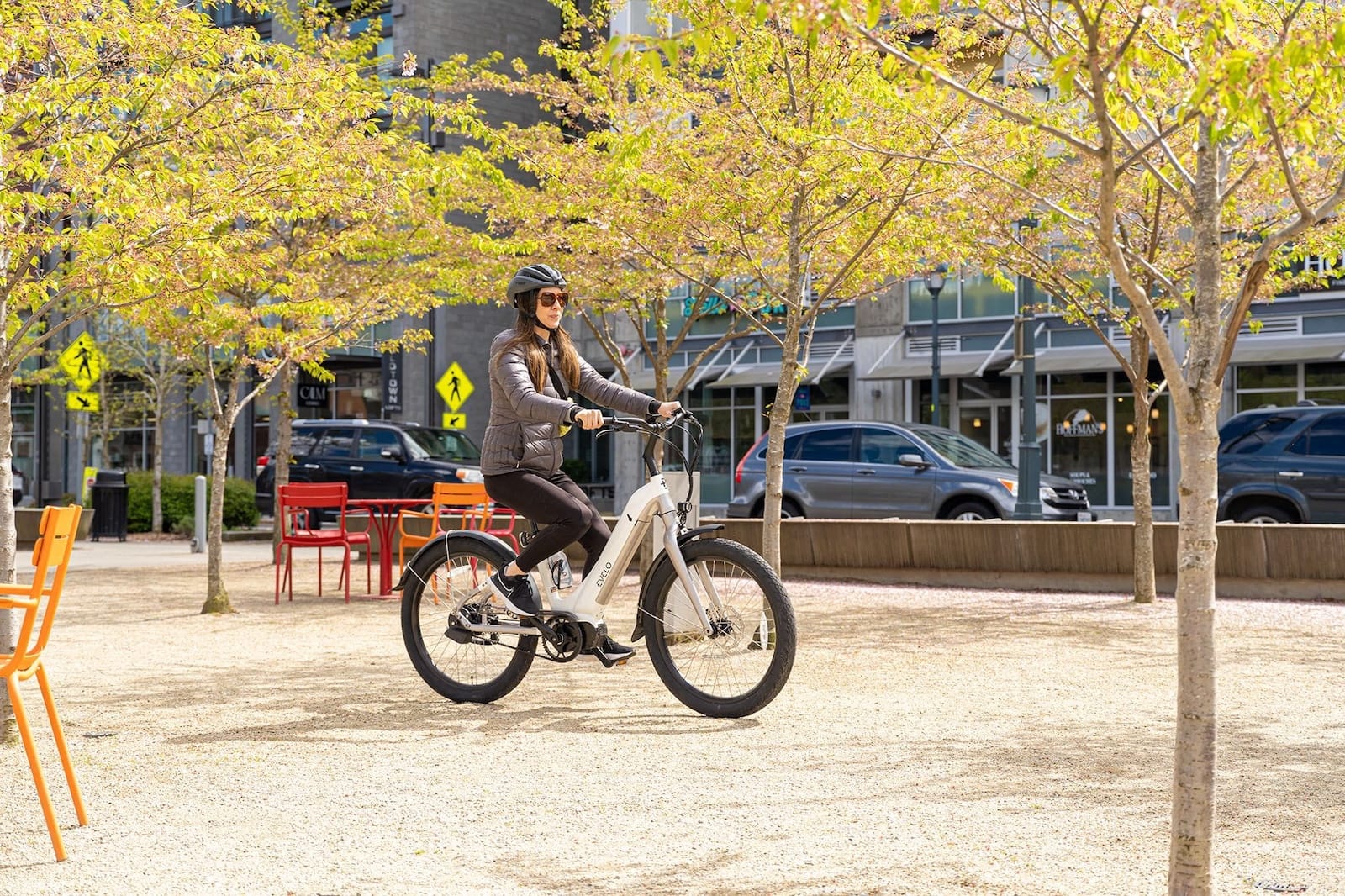
A comfortable electric bike should let you enjoy the ride without constantly adjusting your position or taking pressure off your hands. If the saddle, handlebars, or road surface keep demanding your attention, the fit or setup needs work.
The most comfortable electric bike fits your body, supports a riding position you can sustain, and delivers ride quality suited to your usual roads. A soft saddle is one part of that combination. It cannot compensate for a frame that is too large or handlebars that leave you stretching forward.
Start with fit, then consider riding position, tires, suspension, and the way the motor and gears respond. Those details matter more than a “comfort” label on a product page.
When we help you choose an EVELO, we start with your fit, the rides you want to take, and how you will handle the bike at home. This guide takes you through those same decisions so you can compare bikes with a clear understanding of what matters.
At a Glance: Choosing a Comfortable Electric Bike
-
Start with fit. Compare saddle-height range, mounting clearance, and distance to the handlebars—not just the recommended rider height.
-
Check your riding position. You should be able to look ahead, relax your shoulders, and reach both brake levers comfortably.
-
Choose support over extra softness. Match the saddle to your body and posture, and check its height, angle, and fore-aft position before replacing it.
-
Match the setup to your roads. Consider tire pressure and suspension together, following the guidance for your bike, tires, and load.
-
Assess the whole experience. Try starting, stopping, turning, walking, and parking the bike as well as pedaling it.
What makes an electric bike comfortable
Comfort comes from several parts of the bike working together. The frame determines your starting position. The saddle, handlebars, and pedals determine how you interact with it. Tires and suspension affect what you feel from the road, while assistance and gearing influence how much effort and attention the ride requires.
Use these questions to narrow your options:
|
Area |
What to ask |
|
Fit |
Can I get on, pedal comfortably, and reach the controls? |
|
Riding position |
Can I look ahead with relaxed shoulders and a manageable reach? |
|
Saddle and grips |
Do they provide support without distracting pressure? |
|
Ride quality |
Does the bike suit the surfaces I ride most often? |
|
Assistance and handling |
Can I start, stop, turn, and manage the bike confidently? |
Your priorities will depend on your rides. A short trip on smooth neighborhood streets asks different things of a bike than a long outing over broken pavement. Think about the route you actually use, including the awkward doorway or steep driveway at either end.
Start with a bike that fits your body
Look beyond the rider height range
A recommended height range is a useful first filter. It cannot tell you everything about the fit.
Two people of the same height may have different leg lengths, arm lengths, and comfortable reaches. Compare the available saddle adjustment, frame clearance, and distance to the handlebars before deciding that a bike is the right size.

Compare two models in our range to see why the individual measurements matter:
|
Published measurement |
Galaxy Lux |
Atlas |
|
Recommended rider height |
4′10″–5′10″ |
5′6″–6′3″ |
|
Minimum saddle height |
29.5 inches |
33.5 inches |
|
Standover height |
15 inches |
28 inches |
|
Saddle-to-handlebar distance |
19.5 inches |
21 inches |
A rider within both height ranges still has meaningful differences to consider. The lower frame opening may matter when stepping onto the bike. The available saddle height and cockpit dimensions affect the seated fit.
You will find these dimensions on our Galaxy Lux and Atlas product pages. We list saddle-to-handlebar distance to help you compare the cockpit. This is different from the frame “reach” measurement used on many bicycle geometry charts.
Separate mounting clearance from saddle height
A step-through frame reduces the height you need to lift your leg when getting on or off. It does not, by itself, determine whether you can reach the ground while seated.
Evaluate mounting and stopping separately from your pedaling position. A low frame opening can be helpful even when the saddle needs to sit considerably higher.
Set the saddle so your knee retains a slight bend at the bottom of the pedal stroke, without reaching or rocking your hips to complete the movement. Then check that you can stop and support the bike confidently. If those requirements are difficult to reconcile, ask us or a qualified bike fitter to help assess the setup.
Use a comfortable bike as a reference
If your current bike fits comfortably, use it as a reference. Measure from the top of the saddle straight down to the ground, then compare that figure with the saddle-height range of the bike you are considering. Record the handlebar position and how the cockpit feels, too. Our fit guide explains how to make that comparison.
Compare like-for-like measurements. A saddle-to-pedal figure answers a different question from saddle-to-ground height.
Ask about adjustment limits before assuming a different stem or seatpost will solve the fit. Components offer room to refine a suitable frame; they cannot provide unlimited changes.
Find a riding position you can sustain
For relaxed cruising, start by comparing bikes with an upright riding position. If you enjoy more active pedaling, also try a moderately forward position. Judge each setup while riding, braking, and looking ahead; sitting on a stationary bike only gives you part of the picture.
Upright riding
Higher or swept-back handlebars can bring the grips into an easier reach and reduce how far you lean forward. Many casual riders appreciate being able to sit up and look ahead without holding a stretched position.
Pay attention to the saddle as well. A more upright posture changes how your weight rests on the bike, so the seat needs to suit that position.
A slight forward lean
You do not need to sit completely vertical to be comfortable. Some riders prefer a modest forward lean, particularly when pedaling steadily over longer distances.
Check that you can sustain the position without locking your elbows or feeling that you are propping yourself up through your hands. Choose the posture that works for your body and riding style rather than trying to match a photograph.

Handlebar distance matters alongside height
Check the distance to the grips as well as their height. When you are stretching forward, a different handlebar shape can bring your hands closer and help you sit more upright.
We cover these choices in our guide to handlebar and stem options. The right combination depends on how far the grips need to move and which components fit your bike.
With your hands on the grips, check that your shoulders can relax, your elbows have some bend, and you can operate both brake levers without stretching. Bar and stem changes must also suit the bike’s clamps, cables, hoses, and controls, so discuss substantial changes with a qualified technician.
Watch the demonstration in our seat and handlebar position guide to see how saddle height and handlebar position affect the way you sit on the bike.
Match ride quality to your usual surfaces
Think about the section of your route you enjoy least. It might be a stretch of cracked asphalt, repeated bridge joints, or a gravel path. That is the surface your comfort setup needs to address.

Start with the tires
Tire size and pressure influence how much road vibration reaches you. Greater air volume can provide room to tune the ride, but choosing the widest available tire is an incomplete answer. The tire, its pressure, the load, and the surface all matter.
Do not automatically inflate to the sidewall maximum for every ride, or keep releasing air until the bike feels soft. Use a gauge and follow the pressure limits and guidance for your tires, rims, bike, and load.
There is no single correct pressure for every rider. Account for your weight, luggage, tire size, and riding surface, using the tire manufacturer’s inflation guidance. The pressure must support the load while allowing the tire to absorb surface irregularities.
Understand what front suspension does
A suspension fork allows the front wheel to move over irregularities while reducing some of the impact transmitted through the front of the bike. It can be useful where rough pavement or uneven paths are a regular feature.
It also introduces setup and servicing requirements. Check whether the fork can be adjusted appropriately for you and whether it suits the riding you plan to do.
We use different equipment across our range to suit different riding needs. Galaxy Lux pairs a rigid fork with 24 × 2.4-inch tires. Atlas combines a suspension fork with 27.5 × 2.8-inch tires. Compare those setups alongside the fit and handling of each bike, rather than choosing by tire width or suspension alone.
For smooth streets, a comfortable position and well-chosen tire setup may be enough. Where repeated impacts are the problem, suspension deserves more attention.
Know the difference between seatpost and rear suspension
A suspension seatpost cushions movement beneath the saddle. Rear-wheel suspension allows movement between the rear wheel and the frame. They serve different roles and should not be treated as interchangeable features.
If road impacts are coming through the saddle, check whether a suspension seatpost will fit your bike and preserve your required saddle height. The Cane Creek Thudbuster ST we offer provides 50mm of travel and requires approximately four inches of exposed seatpost for installation.
That requirement matters when your saddle is already near its lowest setting. Confirm the resulting saddle height, correct post diameter, and installation requirements before ordering.
Choose saddle support and comfortable contact points
Choose a saddle by how it supports you while pedaling. Pressing it with your hand tells you how soft the surface feels, but not whether its shape will suit you over a sustained ride.
Look for a shape and width that support you in your normal riding position without rubbing as you pedal. Be careful about adding padding to solve every problem: excessive cushioning can create pressure as your body sinks into it.
Match the saddle to your posture as well as your body. Wider designs generally suit a more upright position, while narrower designs accommodate a more athletic position, as outlined in Brooks’ saddle guidance. Use those categories to narrow the choice, then assess the actual fit.
Before replacing your saddle, check its angle and fore-aft position. Small setup differences can change how the same seat feels. Our saddle adjustment guide shows the adjustments involved. Stay within the component’s limits and use its specified tightening torque.

Give your hands the same attention. Check whether the grips feel supportive and the brake levers are comfortably within reach. If you keep shifting your hands to escape pressure, assess the whole cockpit position before simply buying softer grips.
Persistent pain or numbness warrants a pause and qualified advice. It should not be treated as something you must tolerate to become accustomed to a bike.
Consider how assistance and gearing feel
Comfort includes the effort involved in riding and how easily you can manage that effort.
Assess assistance at everyday speeds
During a ride, pay attention to pulling away from a stop, making a slow turn, and changing assistance levels. Can you request a little help without feeling hurried? Does the response feel predictable?
If a bike has a throttle, learn how it engages and make sure the control is comfortable to use. A feature that sounds convenient on a specification sheet still needs to work naturally for you.
Try the bike at the speeds you expect to ride. A brisk ride along a straight path will not tell you everything about maneuvering through a narrow entrance.
Choose a pedaling rhythm you enjoy
Gearing helps you adapt your pedaling to changing terrain. Consider whether you prefer choosing the ratio yourself or would rather have the system adjust it.
On our Galaxy Lux, Enviolo AUTOMATiQ adjusts the gear ratio automatically toward your selected cadence, or preferred pedaling speed. You choose the rhythm you want; the system changes the ratio within its available range as you ride.
Choose automatic shifting if you want fewer gear changes to manage yourself. Choose manual shifting if you enjoy direct control over when to change the ratio. The right choice is the one that suits your riding preferences and terrain.
For more detail, read our guide to automatic-shifting electric bikes.
Compare bike types around the rides you want to take
Once you understand the fit and features you need, bike categories become more useful.
Start with an upright cruiser for relaxed neighborhood riding. Compare city or hybrid bikes for errands and commuting, and trekking or mixed-surface bikes when your routes regularly include uneven paths. Then check each model against your fit requirements; the category name does not establish whether it will be comfortable for you.
A compact or folding bike can answer a storage problem, but still needs to pass the same fit and ride checks. A smaller footprint does not tell you whether the saddle, cockpit, or handling will suit you.
|
Your priority |
What to compare first |
|
Easygoing rides on smooth streets |
Comfortable reach, saddle support, predictable assistance |
|
Frequent stops and everyday errands |
Mounting clearance, control access, manageable handling |
|
Rough pavement or mixed surfaces |
Appropriate tires, suspension options, suitable fit |
|
Longer recreational outings |
Sustainable position, saddle comfort, gearing, battery planning |
|
Limited storage space |
Actual dimensions, weight, and how you will move the bike |
Use these as starting points rather than rigid categories. A commuter may care most about easy frame access; a leisure rider may regularly encounter rough roads.
For longer outings, consider comfort and battery capacity together. Our long-range electric bike guide explains how route, assistance, load, and battery capacity affect planning.
Write down your two most important requirements before shopping. Easy mounting and manageable storage might come first. For another rider, a comfortable cockpit and less vibration on a rough daily route will matter more. Use those requirements to narrow the field before comparing extra features.
Check comfort on a representative ride
A few minutes with your feet on the ground cannot reveal how a bike will feel once you are pedaling.
Adjust the bike before you assess it, then learn its response in a quiet, open area. Begin with low assistance and practice mounting, starting, stopping, and turning. Our riding practice guide walks through these skills, including how to manage the bike off the saddle.
Work through this checklist:
-
Get on and off. Make sure the movement is manageable without catching a foot or making an awkward twist.
-
Check your seated position. Assess leg extension, reach, and access to both brake levers.
-
Start gently. Learn the assistance response before increasing speed.
-
Practice stops and turns. Check whether you feel in control at the speeds you will use.
-
Try a representative surface. Once familiar with the bike, assess the kind of pavement or path you regularly encounter.
-
Pay attention as the ride continues. Notice whether you keep repositioning yourself, reaching for the bars, or avoiding the saddle.
-
Walk and park it. Include the practical movements needed at home.

When comparing bikes, use a similar route and repeat the same checks. Note what you felt before the details blur together.
When buying online, confirm any missing dimensions and understand the trial terms before ordering. Our 21-day home trial gives you time to assess an EVELO at home, subject to the return conditions, mileage limit, packaging requirements, and applicable return shipping charges.
Keep the packaging and understand those conditions before planning your assessment rides.
Make your current electric bike more comfortable
If you already own an ebike, use the same checks before deciding to replace it.
Write down the specific problem and when it appears. “My hands feel overloaded after fifteen minutes” gives a fitter or service technician more to work with than “the bike is uncomfortable.”
Check the basics first: tire pressure, saddle position, cockpit setup, and whether anything has slipped or loosened. Then consider a suitable saddle, grips, or suspension component if the underlying fit is sound.
Change one thing at a time and keep a note of the original setting. That makes it easier to tell whether an adjustment helped. Follow the relevant component instructions or have a technician make the changes.
There are limits to what accessories can accomplish. If getting on remains difficult, the reach cannot be brought into a comfortable range, or the bike is too cumbersome for your storage space, a different frame or bike may be the more useful solution.
Choose a bike around your body and your rides
Bring a short list of requirements to the buying decision: the fit you need, the position you enjoy, the surfaces you ride, and the practical constraints at home.
Then check those requirements against real dimensions and a representative ride. You will have a clearer answer than any “comfort” badge can provide.
For help comparing our models, contact us with your height, current bike measurements, and the routes you plan to ride. We will help you compare fit, frame access, and equipment so you can choose an EVELO that suits the way you want to ride.
Frequently asked questions
What is the most comfortable electric bike for long rides?
Look for a bike whose fit, saddle, and riding position remain comfortable as the ride continues, with tires and suspension appropriate to the route. Useful gearing and enough battery capacity also matter. Test beyond the first impression rather than choosing solely by the seat’s softness.
Is an upright electric bike always more comfortable?
Many riders enjoy an upright position for casual riding, but individual preferences and body proportions differ. Compare it with a modest forward lean. In either position, you should be able to reach the controls, look ahead, and pedal without repeatedly shifting to escape discomfort.
Are fat tire electric bikes more comfortable?
They can be, but width alone does not establish comfort. Tire construction, pressure, load, and riding surface all contribute to the result. Compare how the complete bike feels and handles on your route rather than assuming the largest tire is the best choice.
Do you need suspension for a comfortable ride?
Some riders on smooth streets find suitable tires and a well-fitting bike sufficient. Suspension becomes more relevant when repeated bumps are a significant part of the ride. Consider where you feel those impacts and whether a fork, seatpost, or different bike setup addresses them.
Does a step-through frame let you put both feet flat on the ground?
Not necessarily. The frame opening affects how you get on and off. Your ability to reach the ground while seated depends on saddle height, your proportions, and the bike’s geometry. Check that separately from mounting clearance.
What should seniors prioritize in a comfortable electric bike?
Start with fit, manageable mounting, accessible controls, and the ability to start, stop, and handle the bike confidently. Consider weight and storage as well as seated comfort. Our electric bike guide for seniors covers those purchasing decisions in more detail.